
STEP 01
Explain the direction of the move
Name the role and give a concrete reason for the change. Focus on the work you want to do and what you can contribute. You do not need to criticise your current employer or describe every frustration that led to the decision. Read the advert carefully: transferable experience cannot replace a qualification or licence that the employer explicitly requires.
STEP 02
Build a bridge with a real example
Choose one contribution that relates to the new work. Explain the situation, your action and what changed. A retail supervisor moving into customer support might discuss helping colleagues handle recurring customer questions. Use the language of the new role where it accurately describes the work, while keeping your actual job title and responsibilities clear. Add relevant study or a project only when you have genuinely completed it.
STEP 03
Draft and review the letter
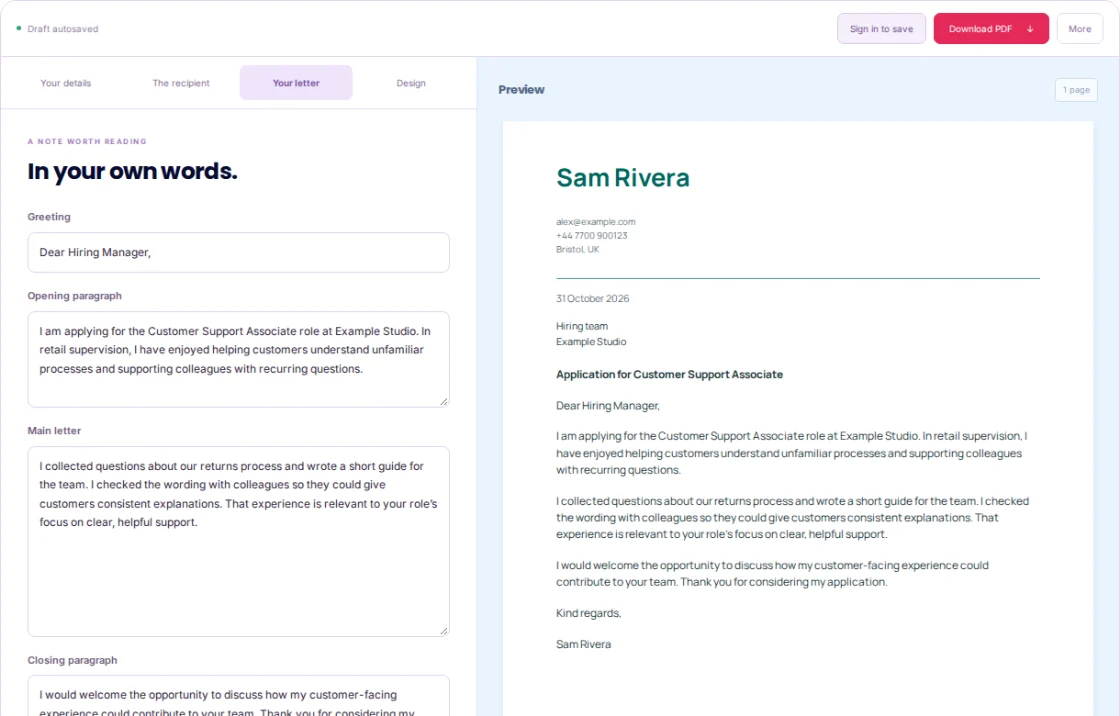
In Cover Letter Maker, add the recipient, role and company, then write a short opening, one or two evidence paragraphs and a closing. If the letter assistant is available, give it your real experience and review its draft before using it. Keep the design consistent with your CV where helpful. Preview all pages, remove repetition and download the PDF. The tool prepares the document; send it through the employer’s requested channel.
An example to work from
I am applying for the Customer Support Associate role at Example Studio. Supervising a retail team taught me to explain unfamiliar processes clearly and stay calm when customers need help. I would like to bring that experience to a role focused on helping people use your service.
PUT IT INTO PRACTICE
From retail supervision to customer support
- Sam is applying for a fictional support role that values clear written explanations and patient problem-solving.
- Sam chooses a genuine example of improving guidance for common customer questions, then explains why that work connects to the new role.
- Review the draft beside the CV. Keep titles and dates consistent, replace the sample company and check the downloaded letter.
Dear Hiring Manager,

I am applying for the Customer Support Associate role at Example Studio. In retail supervision, I have enjoyed helping customers understand unfamiliar processes and supporting colleagues with recurring questions.

For example, I collected questions about our returns process and wrote a short guide for the team. I checked the wording with colleagues so they could give customers consistent explanations. That experience is relevant to your role’s focus on clear, helpful support.

I would welcome the opportunity to discuss how my customer-facing experience could contribute to your team. Thank you for considering my application.

Kind regards,
Sam Rivera
This is a fictional example with a deliberately narrow claim. Do not copy the returns-guide experience unless it is true for you. Add any required qualifications only if you hold them.
Common mistakes to avoid
- Apologising for every difference in your background
- Explain the relevant experience directly and acknowledge important gaps honestly when needed.
- Retelling the whole CV
- Use the letter to develop a useful connection, rather than repeating every role and date.
- Claiming the new job title before doing the work
- Describe transferable responsibilities accurately without presenting yourself as already holding the target role.
Before you finish
Make the connection clear, but let the employer judge your suitability. Replace every fictional company and example before sending.
- The role and company are correct.
- The move has a concrete explanation.
- At least one example connects to the advert.
- Qualifications and claims are accurate.
- The letter agrees with the CV.
- The exported document has been read in full.
Further reading
Official references for the topics covered in this guide.